Questions into actions – the first LCA project for Aidian’s QuickRead go Plus
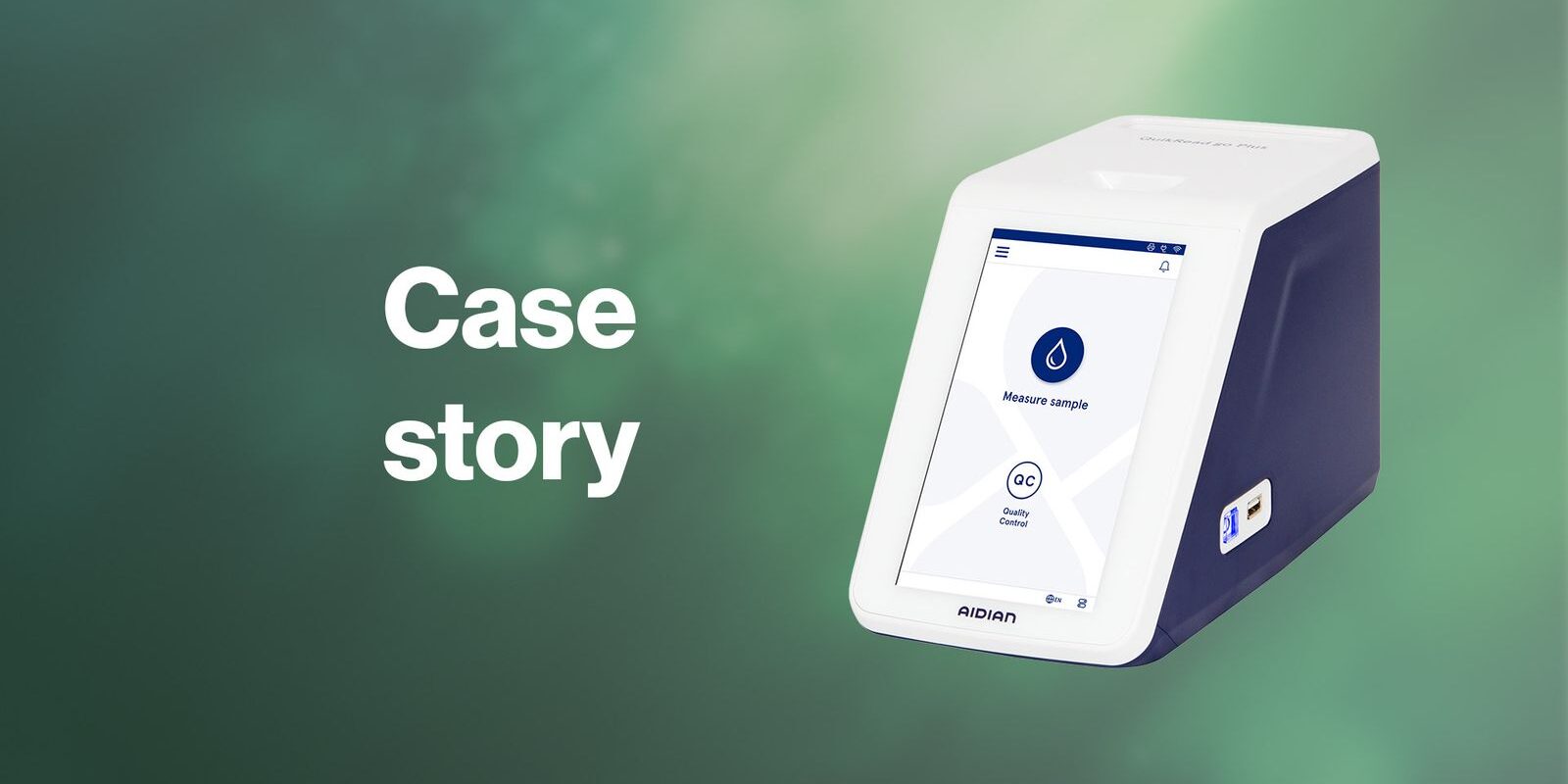
Life cycle assessment (LCA) is already a concrete part of decision-making in the medtech industry in many areas, but the frameworks to execute them are still largely absent. However, doing the project once is the only way to build that framework as well as valuable foresight. Here is the story of medtech company Aidian’s first LCA project and the key lessons learned.
Motivations to start LCA project
Sustainability is becoming a concrete part of everyday decision-making in the Medtech industry. For Aidian, this change has been visible both internally and through customer dialogue. Customers with more advanced sustainability frameworks are increasingly asking about carbon footprints for a given product. At the same time, Aidian wanted a clearer, data-based understanding of the environmental impacts of its own devices.
These two drivers came together in an LCA project for Aidian’s QuikRead go Plus Instrument. The project was carried out in close collaboration with Innokas, Aidian’s long-term manufacturing and development partner, and the LCA was conducted by a sustainability consultancy company Ramboll Finland Oy. For Aidian, this was the first comprehensive LCA project of its kind.
“We wanted reliable data to support development work and to respond credibly to customer questions,” says Jenni Puurunen, ESG Manager at Aidian. “You cannot reduce environmental impacts meaningfully if you do not understand where those impacts stem from.”
Building understanding through collaboration
The full cradle-to-grave LCA was owned by Aidian, and partner Innokas contributed the manufacturing gate. It was clear that the project would require collaboration. The device had a long and international value chain, and no single organization held all the necessary data. Drawing on Innokas’ actual production data gave the customer more defensible numbers for reporting.
Innokas also played a key role in providing detailed insight into the device structure, components, manufacturing processes, and logistics. The practical, product-level knowledge formed an essential foundation for the assessment.
Meetings between Innokas and Aidian were frequent throughout the project, made necessary through Innokas having the most comprehensive understanding of the device’s composition; LCA calculations require a thorough view of the product structure to ensure reliable results. Therefore, bringing sustainability, product design, and manufacturing team perspectives together ensures that the assessment reflects real-world conditions rather than assumptions.
“Having the right partner makes a real difference, especially in your first LCA project,” Puurunen notes.
Managing data gaps without losing credibility
As with most first-time LCAs, data availability was one of the main challenges. Primary data from across the value chain is not always easy to obtain, particularly when it comes to how devices are used and disposed of in different markets, or which electricity mixes apply in different regions.
In the QuikRead go Plus Instrument LCA project, these gaps were addressed through carefully considered average-based assumptions and the use of recognized databases. All assumptions and compromises were documented transparently.
“This transparency is what makes the results usable,” says Puurunen. “Even when everything is not perfect, you can trust the outcomes when you know exactly how the calculation was done.”
Aidian was satisfied with the level of accuracy reached already during this project. Just as importantly, the process itself built an internal understanding of what data is needed and how it should be managed in the future.
Innokas approaches this development step by step, making gradual improvements to data quality and calculation accuracy over time. This ensures that sustainability assessments become more precise with each iteration, without delaying action.
Preparing for future requirements
Current customer expectations around LCA data vary by market and customer segment. In the Nordics, interest is already high, and for some hospitals and laboratories, environmental data may be a requirement rather than a mere preference. In other markets, expectations are still developing.
For Aidian, starting early has been a strategic choice.
“LCA is not only meeting future requirements,” Puurunen says. “The knowledge you gain supports better product development decisions from day one.”
From Innokas’ perspective, the project also demonstrates how sustainability work benefits from close, long-term partnerships. When product knowledge, manufacturing insight, and sustainability expertise are combined, companies can move from high-level ambitions to concrete action.
Key takeaways for companies considering LCA
After this Project, Puurunen considers this the most critical advice for companies in similar situations as them who are considering LCA projects.
- Start early, even if LCA is not mandatory yet.
- Do proper groundwork and make sure that calculations have been done according to a standard like ISO 14040 and ISO 14044 as well as with product specific regulations in mind.
- Document assumptions carefully and be transparent about the calculations, limitations and compromises.
- Collaborate across the value chain to improve access to primary data over time.
- Work with a partner who understands both the product and LCA methodology if internal experience is limited.
Looking ahead, Aidian and Innokas see further opportunities to deepen collaboration around sustainability, including circular economy thinking and more systematic data management.
“Progress is built step by step, together,” Jenni finishes.
Source (text and image): Innokas