How Clinexus aims to transform accessing patient information by clinicians
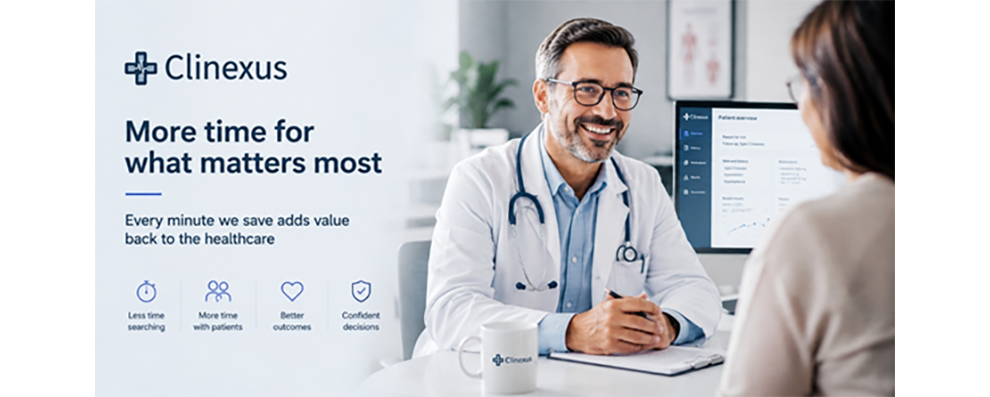
Every patient visit begins with a story, but in today’s healthcare systems, that story is often scattered across disconnected records, timelines, and platforms. Before even meeting a patient, clinicians may spend 10 to 15 minutes searching through fragmented information, piecing together medical history, previous visits, medications, laboratory results, and clinical notes just to understand the situation in front of them.
Healthcare professionals have described this process as one of the hidden burdens of modern clinical work. Constantly switching between systems and reconstructing patient context not only interrupts workflow, but also takes valuable time away from direct patient interaction.
Clinexus is rethinking how clinical context is delivered. Instead of adding another standalone tool to the healthcare ecosystem, the company is building a clinical context infrastructure layer that connects fragmented healthcare systems and continuously organizes patient information around the clinical situation at hand.
Centered on the reason for visit, Clinexus dynamically brings together the most relevant medical context, including prior conditions, medications, diagnostics, observations, and longitudinal patient history into a unified clinical understanding that works across existing EHR environments.
Rather than functioning as a documentation assistant, Clinexus acts as an orchestration layer for clinical context: enabling healthcare systems, workflows, and future intelligent applications to operate on a continuously updated understanding of the patient.
Clinexus envisions a future where interacting with patient information becomes as seamless as interacting with a modern intelligence platform, an “OpenAI for healthcare” infrastructure designed specifically for clinical workflows, interoperability, and patient-safe contextual reasoning.
The result is a shift from navigating systems to understanding patients. Clinexus aims to reduce consultation preparation time from 10–15 minutes to just 3–5 minutes, giving clinicians more time to focus on care, conversations, and better patient outcomes.
Source: Clinexus